👐 Using the Library Database
Running the lab in Instruqt / GitHub Codespaces
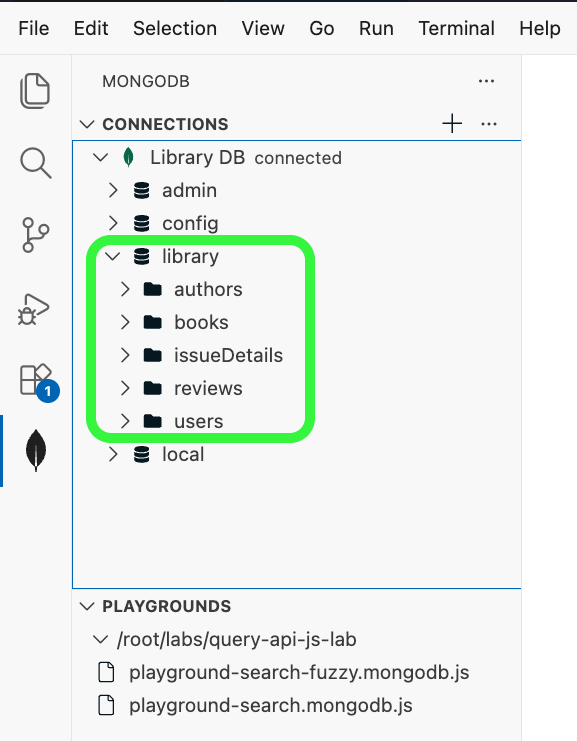
If you haven't already, review the database that is already in your local custer.
- Visual Studio Code
- MongoDB Shell
Select the correct database.
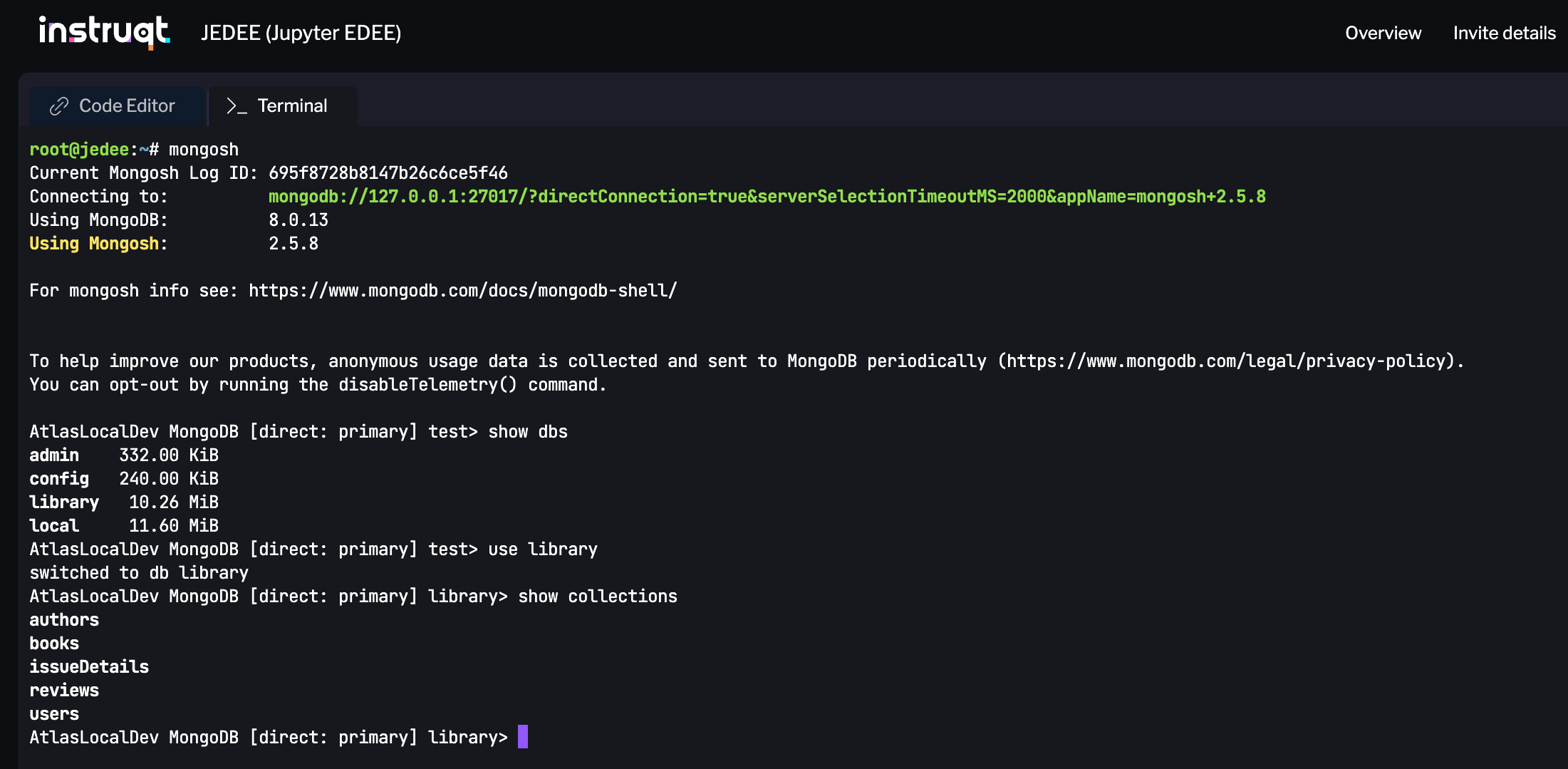
In Instruqt you can connect to the local cluster using the built-in terminal. Click on the Terminal tab, then start mongosh by typing:
mongosh
Then you can select the library database by typing:
use library
You can show all collections with:
show collections
🦸♂️ 💻 How would you switch to a database called orders?
Extra activity! Do it if you have extra time or are following along at home. It won't be covered during the hands-on lab.
Answer
use orders
Even if this database does not yet exist, MongoDB can change to it. If we create a collection, users, etc., then this DB will be created.
Remember to get back to the library database by using:
use library
🦸♂️ 💻 Showing all databases
Extra activity! Do it if you have extra time or are following along at home. It won't be covered during the hands-on lab.
You can also list other databases in your MongoDB instance with:
show databases
🦸♂️ Using MongoDB Atlas or your local MongoDB instance
If you're using Instruqt, you can skip to the next section.
💻 We'll use the library database for all of the hands-on exercises in this lab. If you're using your own MongoDB Atlas cluster, or a local MongoDB installation, import the library data into your database cluster.
- Atlas UI
- MongoDB Shell
Select the correct database in the aggregation pipeline builder.
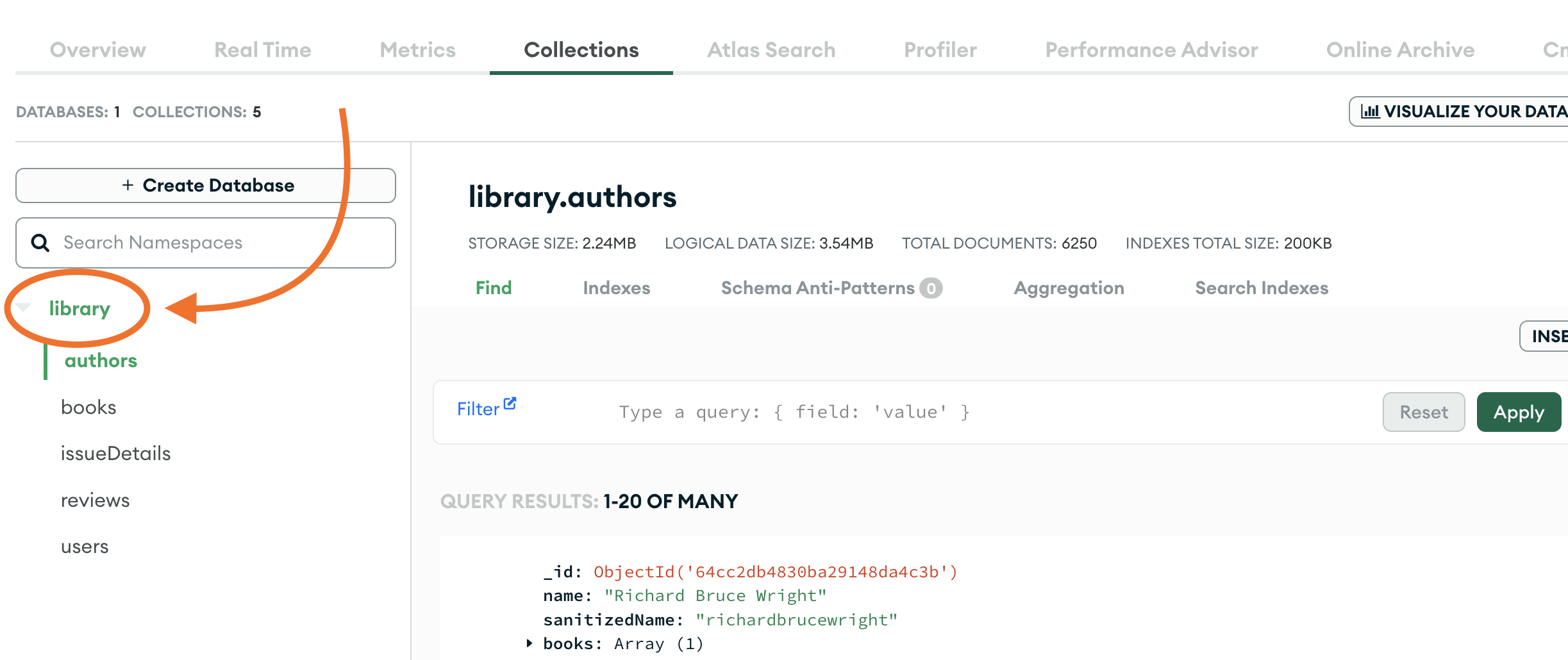
To do that, in a MongoDB shell, type:
use library
You can show all collections with:
show collections
🦸♂️ 💻 How would you switch to a database called orders?
Extra activity! Do it if you have extra time or are following along at home. It won't be covered during the hands-on lab.
Answer
use orders
Even if this database does not yet exist, MongoDB can change to it. If we create a collection, users, etc., then this DB will be created.
Remember to get back to the library database by using:
use library
🦸♂️ 💻 Showing all databases
Extra activity! Do it if you have extra time or are following along at home. It won't be covered during the hands-on lab.
You can also list other databases in your MongoDB instance with:
show databases